Two collections of paper murder cases: one on a chessboard, one in real cities. Every case has exactly one solution, checked by an independent solver before it goes to print.


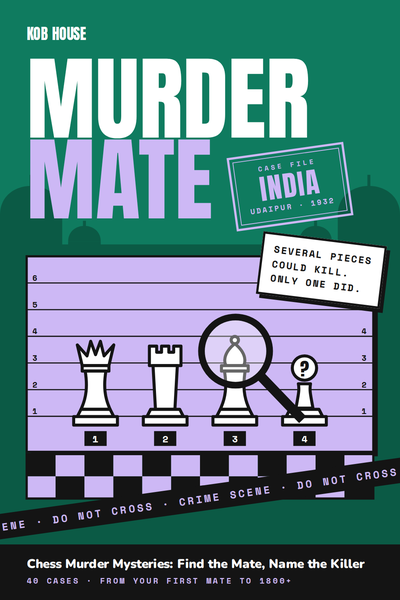
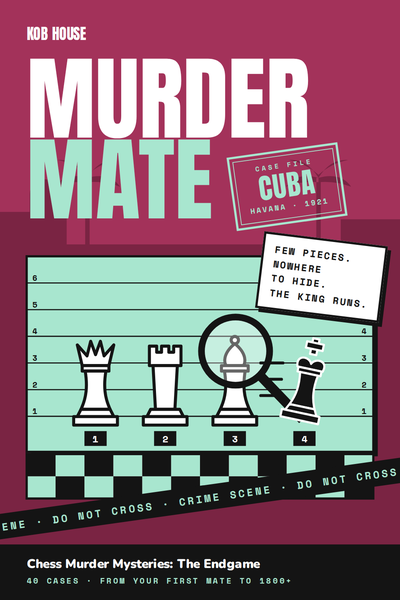
Chess murder mysteries. The board is the crime scene.
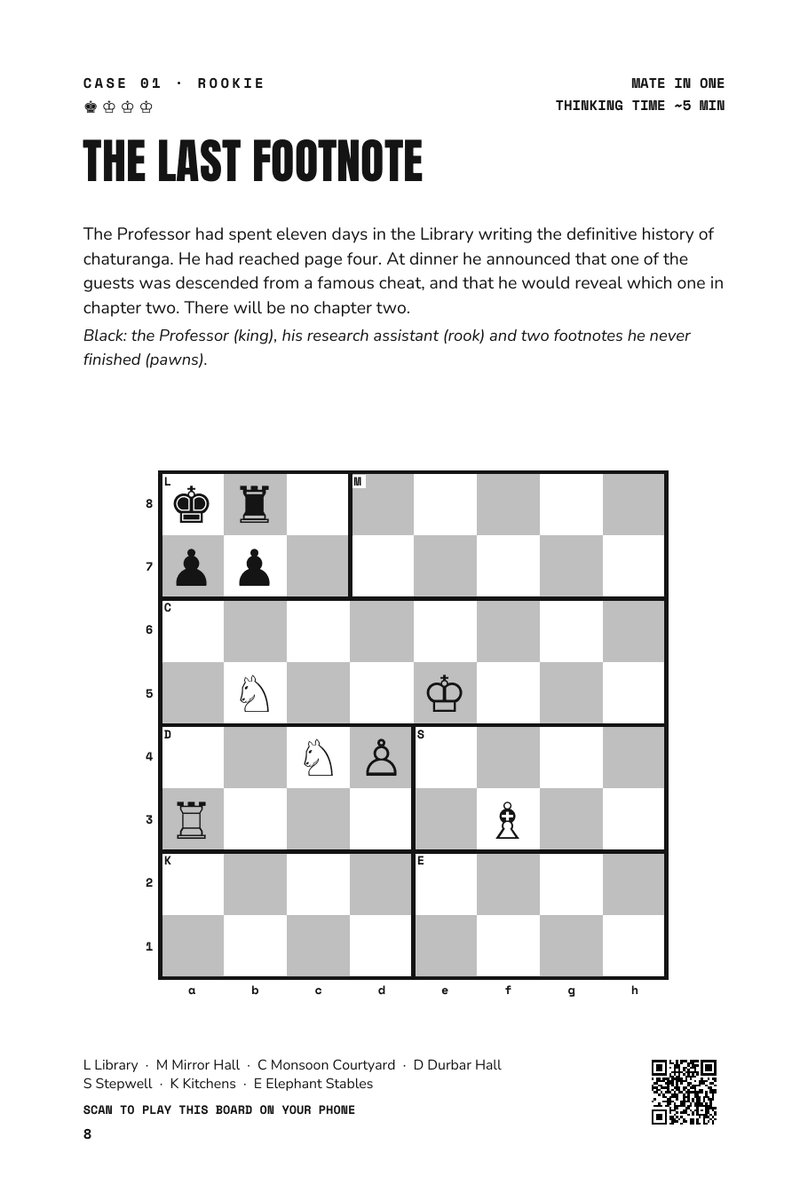
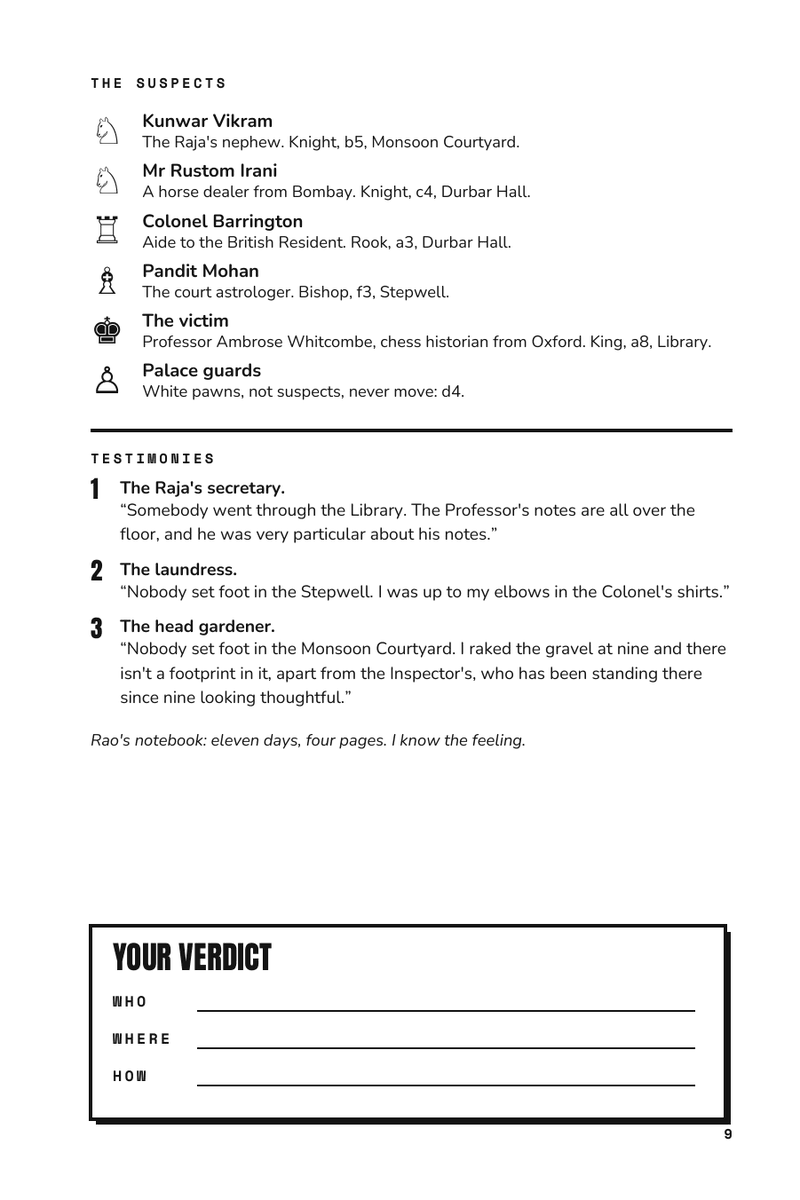
Every case is a real chess position, and every square belongs to a room. The white pieces are the guests, several of them could have delivered mate, and the witnesses say only one did.
On a real chessboard, or scan the QR code on the case: the position opens on your phone, ready to play, with no engine.
Only one white piece moves, whatever Black tries. Several suspects can still pull it off. List them all.
The cook, the butler and the palace clockmaker saw who went where. From Chief Inspector on, one of them is lying.
Who gave mate, in which room, and how. Exactly one answer per case, checked by an independent solver before printing.


You only need to know how the pieces move. Forty cases, from Rookie to Commissioner, and a QR code on every case opens the position on your phone.
A new palace and new suspects every time, and one chess rule that turns into a plot: promotion hides an impostor, a discovered check needs an accomplice, castling makes the perfect alibi.


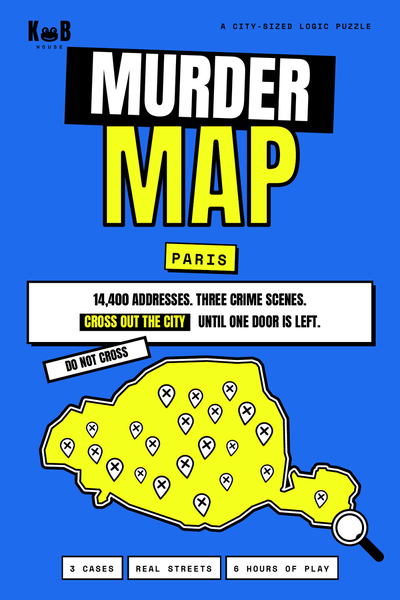
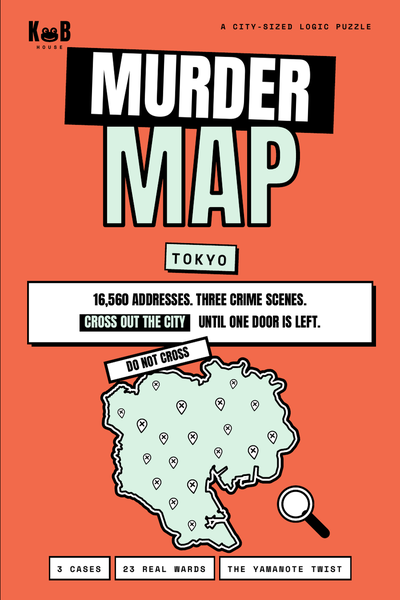
A real city, three crime scenes. Cross out the city until one door is left.
Each book hides three killers in a real city and hands you the witness statements, the map and the street grids. Same rules everywhere, and one twist per city taken from something real about it.

Inspector Marchetti retired to Biarritz and left you her notebook. Twenty arrondissements, one killer.
Out nowSee the book
Three case files in an unclaimed umbrella. Twenty-three wards, one loop line, and a station that is not on the map.
Out nowSee the book
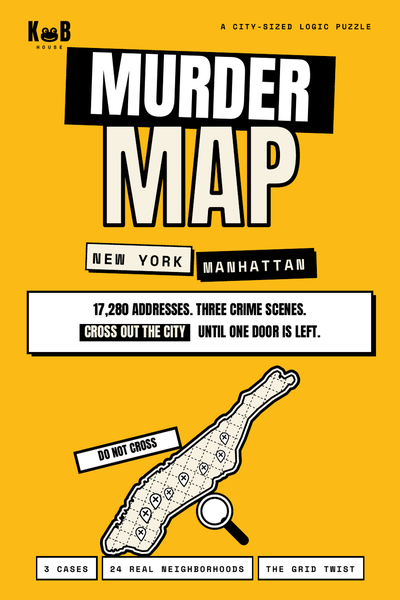
Three cases pencilled into a taxi driver's street atlas. Twenty-four neighborhoods, and a grid nobody walks diagonally.
Out nowSee the bookRead the statements in order. Each one is true, and each one lets you cross out part of the city. Four steps, one pen, no knowledge of the city needed.
Every witness gives you one fact. None of them lies. Each fact rules out part of the city.
Hatch the districts the clue eliminates on the printed map. Trust the map, not your memory.
Six real streets per district. Cross the ones that no longer fit.
Numbers 1 to 120 on every street. Keep going until a single door survives, then check the verification code.
You'll know the rules in two minutes. You'll need about two hours per case. That is the point: one pen, one city, one thing on your mind.
A clear task, a simple gesture, progress you can see. Cross out the city one line at a time and let the rest of the day wait.
Paper, pen, sixteen statements. Nothing to swipe, nothing to check, nothing to charge.
Every hatched district and every crossed-out number is work you did. When one door is left, the code at the back confirms it.
Every witness tells the truth. Every case has exactly one solution, checked by an independent solver before printing. No trick questions.
A case for a rainy Sunday · a long flight · a quiet evening
Every city gets one mechanic of its own, taken from something real: a loop line, a street grid. The books stand alone and can be played in any order.
Rive gauche or rive droite, along the Seine or by the périphérique: twenty arrondissements and the clues to cut them down, one statement at a time.
The Yamanote loop circles the city with 30 stations. Witnesses tell you how far someone rode, clockwise or against the clock, and the loop closes in on the killer.
Manhattan on a lettered grid, avenues straight up the page. Witnesses tell you how far they walked, up, down or across, never diagonally.
Every case is generated and then re-solved by an independent solver before it goes to print, which means the logic always holds: one solution, no guessing, no dead ends, no case that falls apart on page forty.
Paperbacks, 6 × 9 inches, printed on demand and shipped by Amazon worldwide.
A new online mystery every month, plus first word on every new Kob House book. No spam, exactly one solution.