The Alligator King
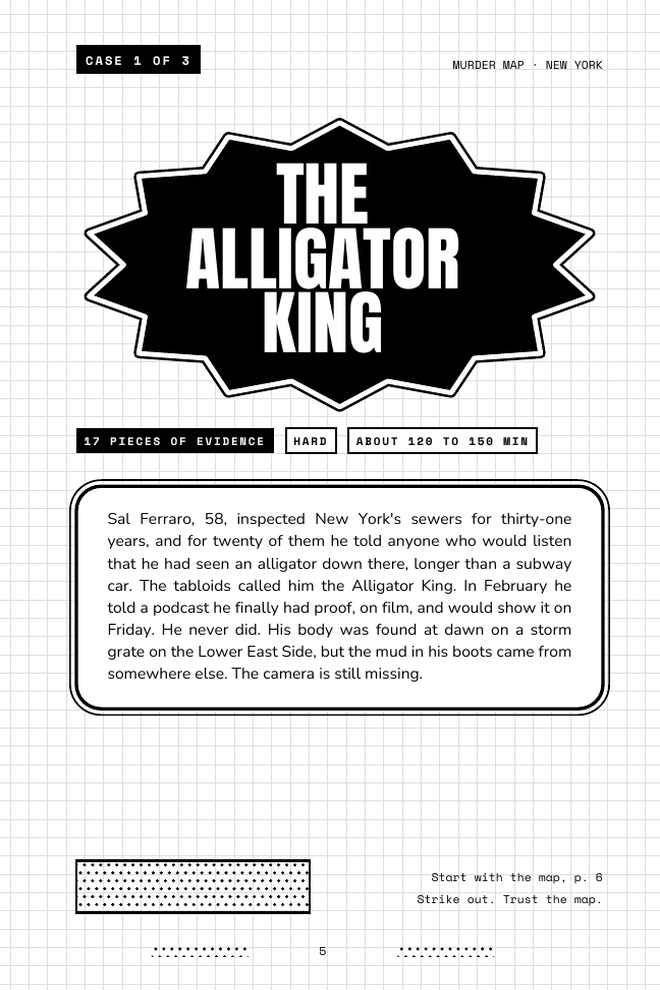
A sewer inspector who swore there was something under Manhattan, and finally had it on film.
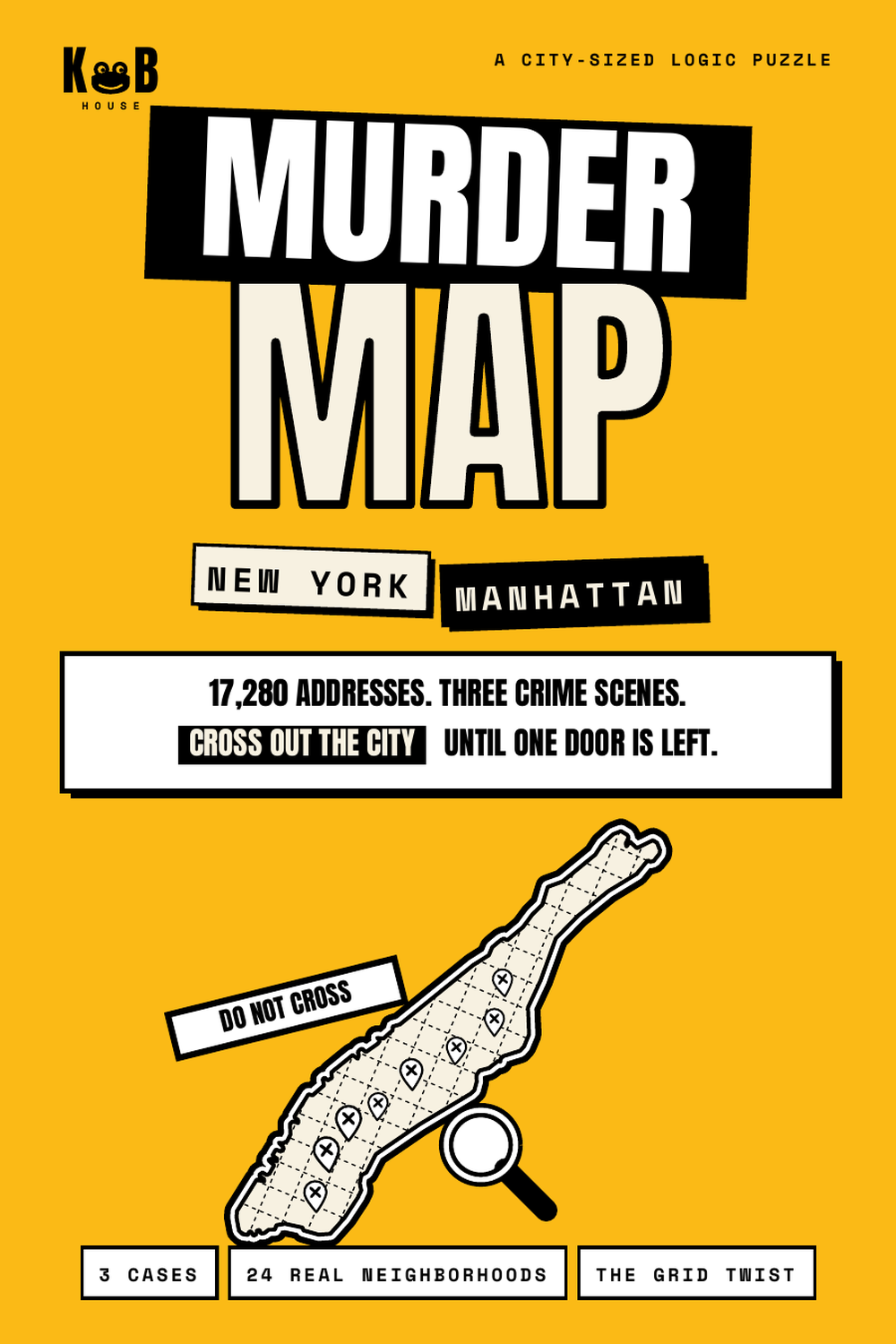
Augustus Pell drew the street atlas that taxi drivers kept under the seat, and pencilled three unsolved cases into his last copy. Nobody in this city walks diagonally. Four steps, one pen, no knowledge of New York needed.
Every witness gives you one fact. None of them lies. Each fact rules out part of the city.
Hatch the neighborhoods the clue eliminates, or count the squares on the grid.
Six real streets per neighborhood. Cross the ones that no longer fit.
Numbers 1 to 120 on every street. Keep going until a single door survives, then check the verification code.
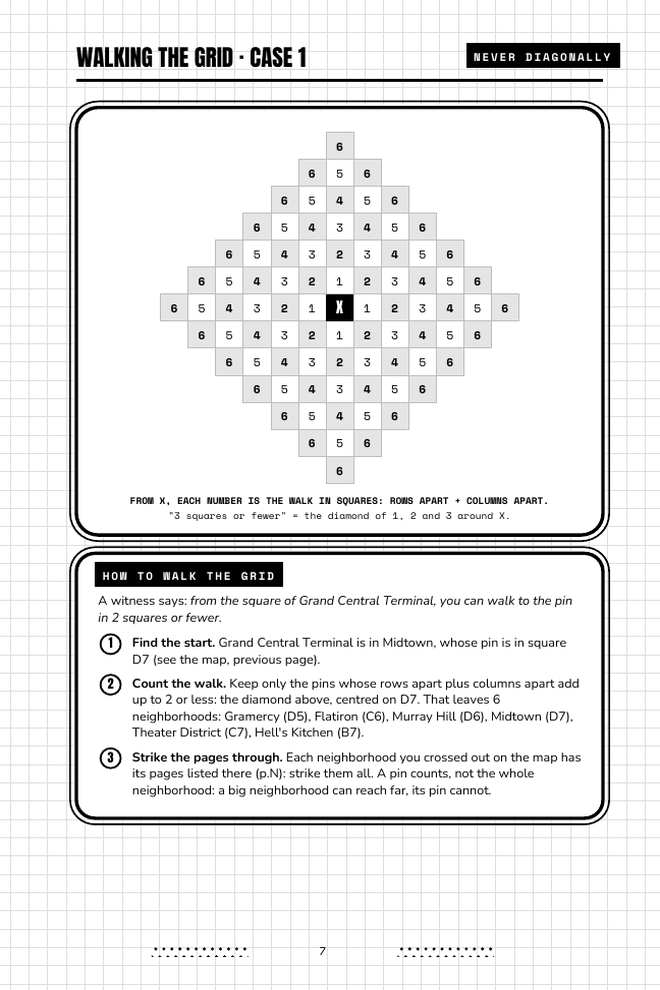
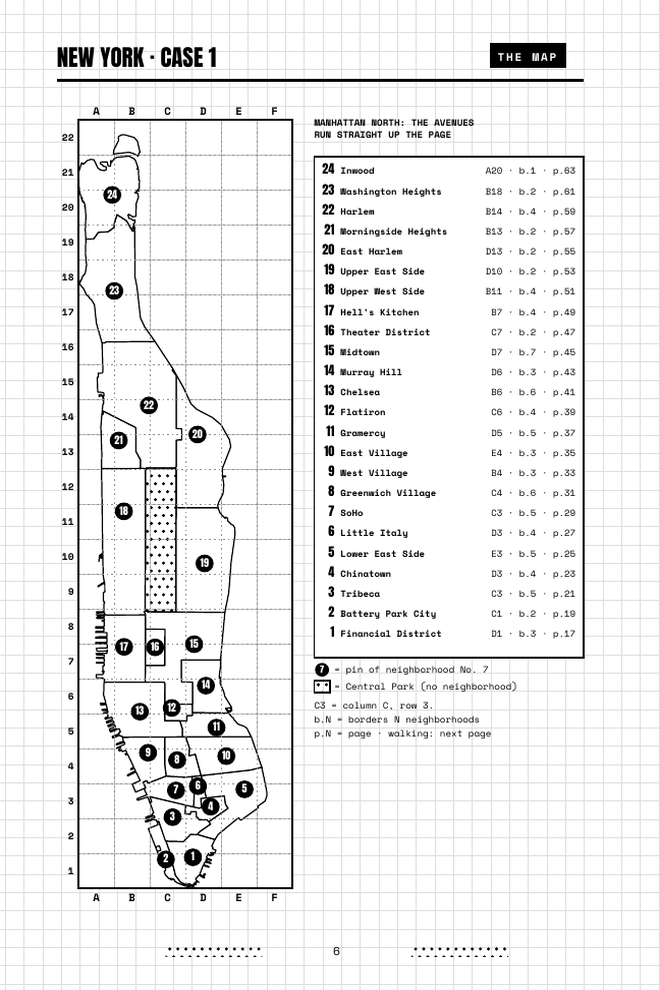
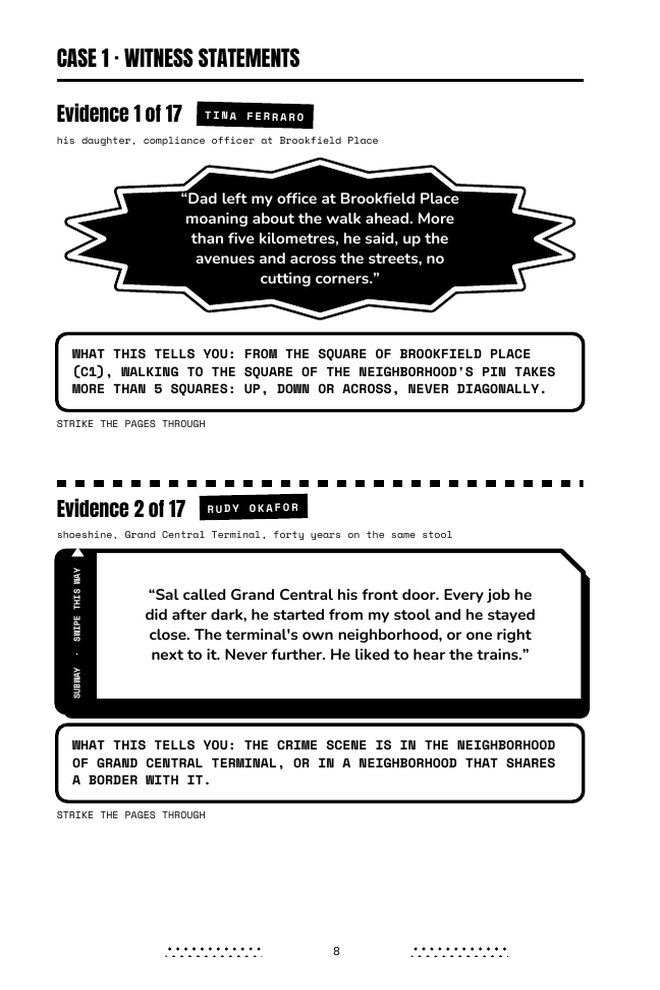
Manhattan is drawn the New York way, avenues straight up the page, and cut into squares lettered A to F and numbered 1 to 22. Witnesses tell you how far they walked, up, down or across, never diagonally. Count the squares and strike out everything too near or too far. A worked example sits next to the grid of each case.
Every Murder Map book has one twist, taken from something real about its city. Same rules, same pen, a different way to close in.
24 genuine neighborhoods, from the Battery to Inwood. 144 real streets, six per neighborhood. 17,280 house numbers to cross out. Every clue is printed on the page: on the Hudson or the East River, downtown or above the park, a street named after a person, a number divisible by four.
Three cases inspired by New York urban legends, each with its own printed city. Fifteen to seventeen statements per case, about two hours each, and exactly one answer, checked by an independent solver before printing.
A sewer inspector who swore there was something under Manhattan, and finally had it on film.
A night nurse who laughed at the legend, until the crying started under her window.
A coin dealer found under a tower, a 1943 copper penny closed in his fist.
6 × 9 inch paperback, matte cover, white paper made to take a pen. The city is printed three times, once per case.
The paperback is on its way to Amazon. Check back in a few days, or follow Kob House on Instagram.
Every case is generated and then re-solved by an independent solver before it goes to print, which means the logic always holds: one solution, no guessing, no dead ends, no case that falls apart on page forty.
Also in the Murder Map series: